
walking your dog for health
walking your dog for health-You stare at your gym membership tag gathering dust on your keychain, feeling the weight of a sedentary workday. Meanwhile, your dog is staring at you with “the look”—that soulful, slightly pathetic gaze that says they haven’t smelled a fresh blade of grass in eight hours. You want to get fit, but boutique fitness classes are expensive, and your motivation is currently hitting an all-time low.
The solution isn’t a high-priced personal trainer or a fancy treadmill; it’s currently wagging its tail at your feet. Walking your dog for health is the most underrated, low-cost strategy to transform both your physique and your pup’s behavior. It turns a chore into a shared wellness journey that costs nothing but your time.
In this guide, you will learn:
- How to turn a basic potty break into a legitimate cardio session.
- The surprising mental health and pets connection that reduces human cortisol levels.
- A structured 30-day “Walk & Wag” challenge to build a permanent habit.
- Practical tips for maximizing physical activity with dogs without spending a dime.
The Science of Walking Your Dog for Health
When we talk about walking your dog for health, we aren’t just discussing burning a few calories. For humans, consistent walking reduces the risk of chronic diseases like hypertension and Type 2 diabetes. For dogs, it is the primary way they engage with the world, preventing obesity-related joint issues and destructive “boredom” behaviors.
Research consistently shows that dog owners are significantly more likely to meet recommended physical activity guidelines than non-owners. This isn’t just because of the physical movement; it’s the accountability factor. Your dog doesn’t care if it’s Monday morning or if you stayed up late watching Netflix; they provide the external nudge we all need.
Beyond the physical, the dog walking benefits extend to your neurological health. The rhythmic nature of walking, combined with the companionship of a pet, triggers the release of oxytocin. This “cuddle hormone” lowers stress and helps regulate your heart rate after a long day of meetings.
Low-Cost Exercise for Dogs: Why Simple is Better
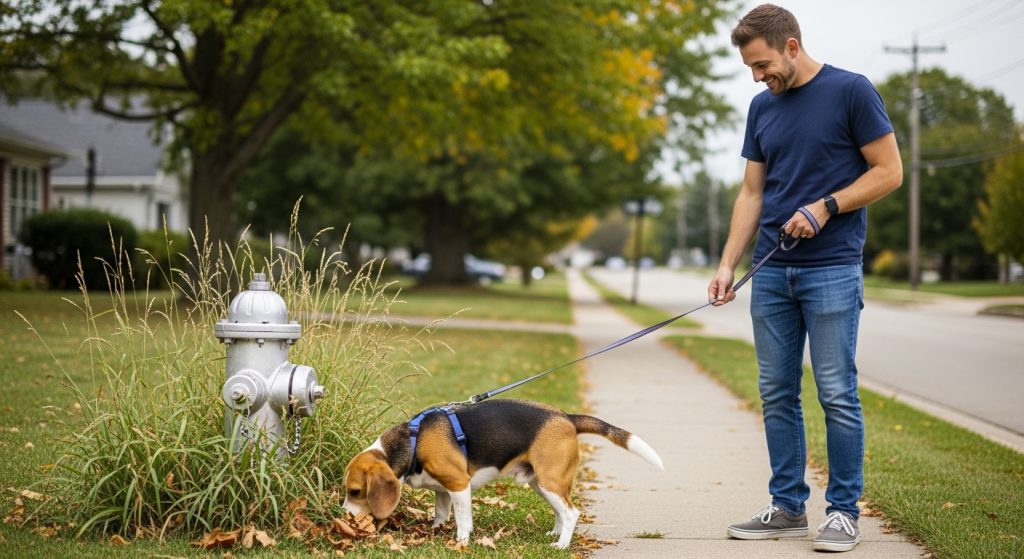
You don’t need a backyard agility course or a $50-an-hour dog walker to keep your pet healthy. The sidewalk is the world’s best gym, and it’s completely free. Low-cost exercise for dogs starts with understanding that “quality” of movement matters as much as “quantity.”
The “Sniffari” vs. The Power Walk
While your goal might be a high heart rate, your dog’s goal is often sensory input. You can balance these by alternating your pace. Use the first five minutes as a “sniffari” where your dog chooses the path, then transition into ten minutes of brisk walking.
Utilizing Local Geography
Look for public parks with slight inclines or community hiking trails. Walking on varied terrain—like grass, sand, or dirt—engages different muscle groups for both you and your dog. This builds core stability and keeps the routine from becoming a mindless loop around the block.
Mental Health and Pets: The Invisible Benefits
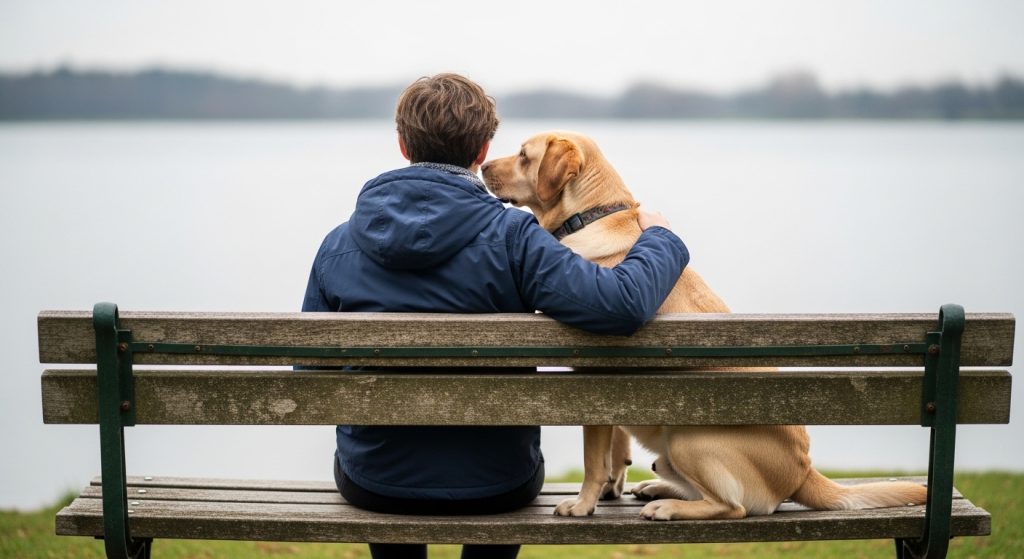
We often focus on the physical “wag,” but the mental “repeat” is where the magic happens. Isolation is a growing health crisis, yet walking a dog serves as a social icebreaker. You are more likely to chat with neighbors or fellow pet owners, fostering a sense of community that boosts mental health and pets‘ social skills simultaneously.
Reducing Anxiety for Both Ends of the Leash
Dogs that lack physical stimulation often develop “separation anxiety” or “leash reactivity.” By prioritizing physical activity with dogs, you are effectively draining their “anxiety tank.” A tired dog is a calm dog, which in turn creates a more peaceful home environment for you.
The 30-Day “Walk & Wag” Challenge
Most fitness plans fail because they are too intense, too fast. This plan focuses on walking your dog for health by building intensity incrementally. This approach ensures neither you nor your dog ends up with sore paws or strained muscles.
Week 1: The Habit Reset
Focus on consistency over distance. Your goal is to get out the door at the same time every day, even if it’s only for 15 minutes.
- Days 1-7: A 15-minute morning walk and a 15-minute evening walk.
- Key Focus: Perfecting leash manners and establishing a “ready to go” cue.
Week 2: The Interval Boost
Now that the habit is formed, we introduce physical activity with dogs that raises the heart rate.
- Days 8-14: Increase the morning walk to 25 minutes.
- The Technique: Incorporate “intervals”—walk briskly for two minutes, then stroll for one.
- Tip: Use a sturdy 6-foot leash rather than a retractable one for better control during fast segments.
Week 3: Environmental Enrichment
Monotony is the enemy of progress. This week is about mental stimulation and new dog walking benefits.
- Days 15-21: Drive to a new location (a different neighborhood or park) twice this week.
- The Technique: Add “obedience breaks.” Every five minutes, ask your dog to sit or stay before continuing.
- Benefit: This keeps the dog’s brain engaged and prevents you from “zoning out.”
Week 4: The Endurance Phase
By now, your stamina and your dog’s muscle tone should be visibly improved.
- Days 22-30: Aim for one 45-minute “long walk” per day.
- The Goal: Observe your dog’s energy—are they panting happily or dragging behind?
- The Result: You’ve built a foundational habit that no longer feels like effort.
Practical Insights from the Field
As a long-time dog advocate, I’ve seen many owners make the mistake of thinking “more is always better.” It isn’t. Pushing a senior dog or a flat-faced breed (like a Pug) too hard in the heat can be dangerous.
Always check the “7-Second Rule”: Place the back of your hand on the pavement. If you can’t hold it there for seven seconds because it’s too hot, it will burn your dog’s paws. On those days, stick to the grass or walk during the early morning hours.
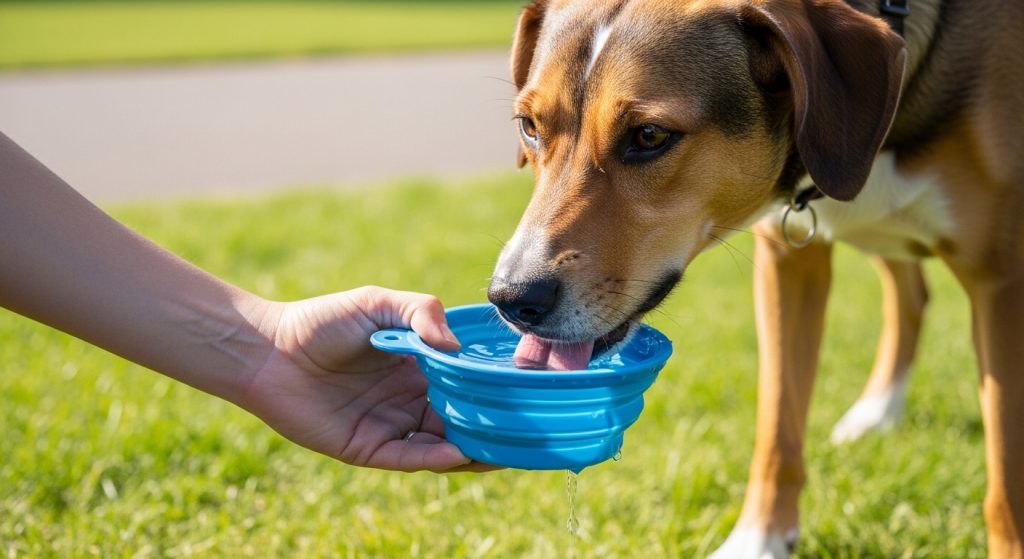
Additionally, don’t overlook the importance of hydration. If you are thirsty, your dog was likely thirsty ten minutes ago. Carrying a small, collapsible water bowl is a low-budget way to ensure your walking your dog for health routine doesn’t end in heat exhaustion.
Common Mistakes to Avoid
- The “Weekend Warrior” Syndrome: Don’t stay sedentary all week and then try to hike five miles on Saturday. Consistency is what yields dog walking benefits, not occasional intensity.
- Distracted Walking: Being on your phone ruins the mental health benefits for you. Use this time to disconnect from screens and reconnect with your pet.
- Ignoring the “Pooch Pace”: If your dog is sniffing a specific spot for a long time, let them. That mental stimulation is just as important as the physical steps.
Moving Toward a Healthier Future
Walking your dog for health isn’t just a trend; it’s a return to the basic, biological bond between humans and canines. You don’t need fancy gear, a gym membership, or a complex supplement routine. You just need a leash, a comfortable pair of shoes, and the willingness to step out the front door.
By following the 30-day “Walk & Wag” challenge, you transform a daily necessity into a powerful tool for longevity. You’ll find that as your dog’s tail wags more, your energy levels rise, your stress dissipates, and your bond grows stronger than ever.
Ready to start? Put on your shoes, grab the leash, and take that first 15-minute loop today. Your health—and your dog—will thank you.



0 Comments